Before the Guesthouse Sign: A Short History of the Rural Inn
A short history of the rural inn shows how travellers’ needs shaped its changing roles, helping you read an old roadside building with greater care.
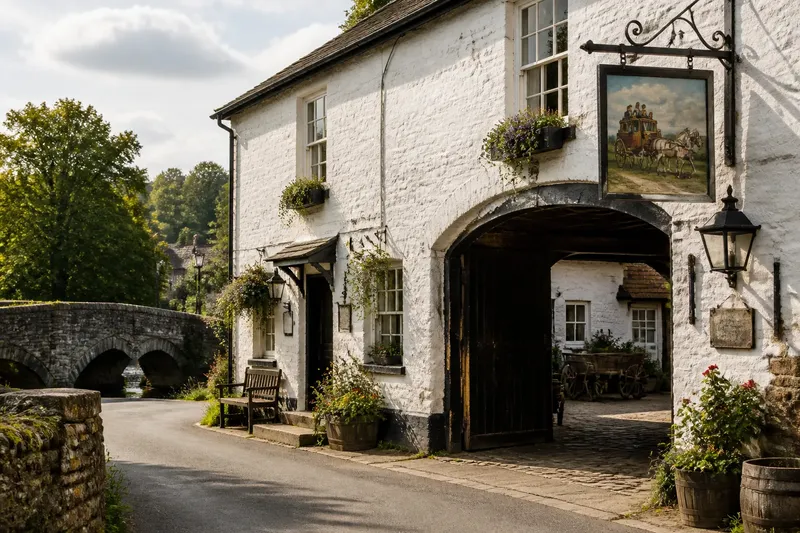
The easiest mistake when reading a rural inn is to assume that its old sign tells the whole story. A painted coach, a ship or a crown may suggest a neat origin, but the building may have served different travellers, owners and neighbours over time. A short history of the rural inn is less a tale of one fixed institution than a way to notice how places for rest, food and company changed with the roads around them.
Start with the journey the inn served
Before a guesthouse sign, an inn was often understood through what it offered people on the move. A traveller might need a meal, a bed, a fresh horse, news from the next market town or simply a place to wait out bad weather. Which of those needs mattered depended on the route, the season and the kind of traffic passing the door.
Some establishments stood on coaching roads or at a junction where journeys could be broken into manageable stretches. Others were close to a ferry crossing, market, port, mine or place of worship. Their location could shape the work inside: a busy stopping point might need space for vehicles and animals, while a small village inn could be as much a local meeting place as a lodging for strangers.
That distinction matters when looking at a building today. A broad entrance, a yard or a row of outbuildings may hint at former travel needs, but none proves a single history on its own. Look for a cluster of clues: the old route, nearby bridges or crossings, the shape of the plot, and how the building faces the road.
Three roles could overlap under one roof
It is tempting to divide inns into tidy types, but their roles often overlapped. A rural inn might serve passing travellers, local residents and people attending a nearby market or gathering, with the balance shifting over the years.
- The roadside stopping place: This role suited long-distance travellers who needed food, rest or a change of transport. A yard or stable could be central to the business, even if the public room is what visitors remember now.
- The village meeting place: Residents might call in for a meal, conversation or community business. For a visitor interested in local life, this kind of inn can offer a different impression from a building oriented mainly towards passing traffic.
- The lodging house: As travel patterns and expectations changed, some inns came to put greater emphasis on overnight stays. Rooms, private dining or a quieter atmosphere might matter more than the old functions associated with the road.
These are useful lenses, not boxes. An inn could host travellers and locals at once, or move from one emphasis to another as routes, transport and village life changed. Ask what work the place seems to have done, rather than insisting it must fit one category.
Roads and transport changed the inn’s rhythm
When a route carried regular traffic, an inn could depend on a predictable flow of arrivals. The coach road brought one pattern of stops; later, railways, private motor travel and changes in local employment could redirect visitors or alter how long they stayed. A building’s fortunes might follow those shifts, but the effect was never identical from one village to the next.
A railway station could draw some travellers away from an old road, while also bringing new visitors into a district. A motorist might value parking and a meal, whereas a walker or cyclist may seek a place to dry a coat and ask about the next stretch. The inn’s role could adapt, decline, or become more local in character; the surrounding community and the route’s position both mattered.
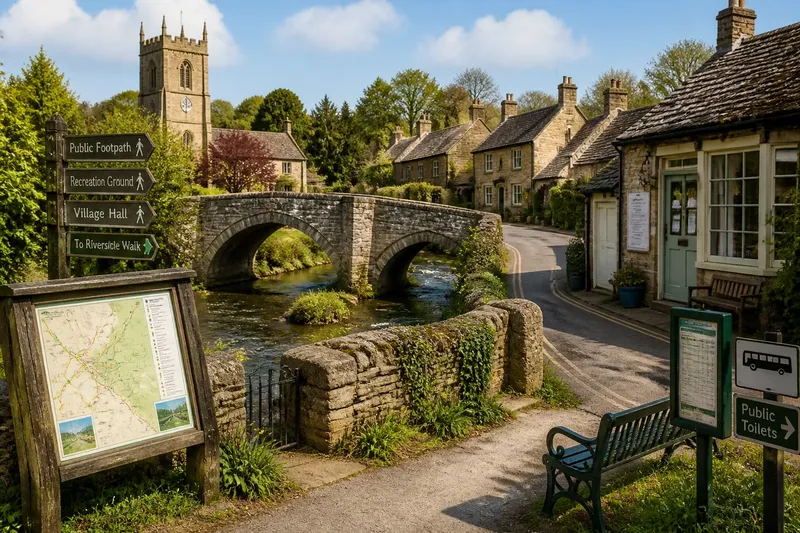
Say you arrive in a village where the inn stands beside an old bridge, while the present main road bends away from it. Imagine checking a local map, noticing the bridge’s approach and asking at the village museum or shop whether the crossing once carried through traffic. That small enquiry may help explain the building’s position without turning a plausible clue into a certain account.
Read the building without forcing a story
Old inns can retain traces of earlier use, though alterations may blur them. A carriage entrance might have become a window; a stable could now be a dining room or a separate cottage. Rooms may have been joined, divided or rebuilt as owners responded to changing needs.
Look at what can be observed from public places: the building’s relationship to the road, its entrances, the arrangement of its wings and any visible yard. Then compare those details with local interpretation, such as a heritage plaque, parish history or museum display. A name or sign is a useful starting point, not a certificate of age.
What is not worth the effort is trying to assign a precise former function to every doorway or stone from appearance alone. Rural buildings are altered, reused and repaired; a confident guess can be less illuminating than admitting that the evidence is incomplete. If the building is private or access is restricted, keep to public paths and ask before taking photographs inside.
Which kind of inn history matters to your visit?
How can I tell whether an inn served travellers?
Look for its relationship to historic roads, crossings, markets or transport stops, then compare that setting with local records or interpretation. A yard or large entrance can support a line of enquiry, but cannot settle the question by itself.
Was every rural inn also a pub?
The words and services associated with inns have varied by place and period. Some inns provided drink and lodging alongside other services, while others changed their offer; use local descriptions rather than assuming every building followed the same pattern.
Why do some old inns have stables or coach arches?
Such features may reflect the needs of travellers and transport that once reached the premises. They can also have been altered or added for another use, so read them alongside the site’s position and any local account.
What should I notice on a heritage visit?
Notice the route, the approach to the door, the relation between the main building and any yard, and how the inn sits within the village. A question asked locally can add context that the sign alone cannot provide.
Choose a lens that fits your kind of visit
If you are following an old road, focus on the inn as a stopping place: its position, access and links to nearby crossings. This approach suits route-minded visitors who want to understand why a building stands where it does, without claiming that every feature survives from the same period.
If you are spending time in a village, consider the inn as a social place. Ask how residents use it now and look for signs of its connection to local gatherings or trade. This suits visitors who are curious about everyday community life, not just the building’s earlier function.
If you are staying overnight, compare the inn’s heritage character with the kind of stay you want. A historic atmosphere may come with uneven floors, later additions or rooms arranged around an old plan; read the accommodation details and ask the proprietor about practical needs. The label “inn” cannot tell you what the rooms or facilities are like.
For a first visit, combine the lenses rather than choosing a single answer: trace the nearby route, notice the building’s place in village life, then check what its present use offers. That is the most useful way to approach the short history of the rural inn. A sign may name the place, but the road outside and the people who use the rooms give its story more depth.