Packing for a Night in the Countryside, Without the Whole House
Packing for a night in the countryside is easier when you match each item to your plans, pack for one likely change and leave room for the journey home.
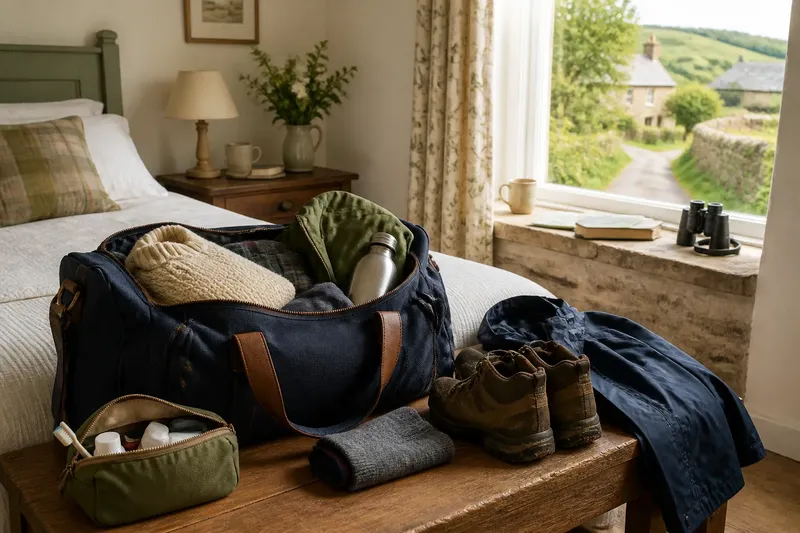
The common mistake with packing for a night in the countryside is treating one overnight bag as a smaller version of a week’s luggage. That brings spare outfits, duplicate toiletries and equipment for activities that may never happen, while leaving little room for a loaf from the village shop or a damp coat. Packing for a night in the countryside works better when the bag reflects the stay you have actually planned.
Start with three questions: how long will you be away, what will you do between arrival and departure, and what can your accommodation already provide? Then pack for those answers, not for every possibility. A little spare capacity is useful: it gives a muddy pair of walking socks somewhere separate to go and lets you carry home the small, practical things a short visit tends to gather.
Choose the bag around the journey and the room
A compact overnight bag is often enough for a simple stay, but its shape matters as much as its capacity. If you are arriving by train, walking from a village bus stop or carrying your bag over a gravel drive, a small rucksack or cross-body holdall is easier to manage than a rigid case. For a car journey to a cottage with a short path to the door, a soft weekend bag may be more convenient to pack.
Think about where the bag will live once you arrive. A narrow bedroom, a shared hallway or a room with no obvious luggage stand can make a large case an awkward houseguest. A soft bag can be tucked beneath a bench or into a corner, and it is less likely to claim the floor you need for boots.
Before packing, check the accommodation description for useful basics: towels, bedding, a hairdryer, tea and coffee, or somewhere to dry wet clothes. If a detail is unclear and would change what you bring, ask the host rather than packing a duplicate “just in case”. Follow any relevant instructions on equipment or products, and local rules where they apply.
Pack differently for a quiet overnight stay
If the plan is a late arrival, supper nearby and a slow morning, choose the smallest useful set of clothes. Wear your travel outfit there and back if it will still feel comfortable, and take one clean change for the evening or morning only if your plans call for it. A spare layer is usually more useful than a second full outfit when the weather turns cool after sunset.
For toiletries, decant the essentials into small, secure containers or use solid versions if they suit you. A toothbrush, toothpaste, any regular personal care items and a comb may be all you need; do not bring a full bathroom shelf because the trip includes one night. Keep the few items you use first thing in a small pouch so you are not rummaging at the bottom of the bag.
Say you are heading to a village inn after work, with dinner in the dining room and breakfast before the return train. Wear comfortable travel clothes, pack a clean shirt and sleepwear, and add a light jumper for the walk back from supper. If the inn supplies towels and a hairdryer, leave yours at home; the result is a bag that can sit beside the bed without taking over the room.
Allow for a walk, a garden visit or changing weather
A stay built around a footpath, farm shop or village garden needs a different balance. Keep the clothes you will walk in separate from anything you want to wear indoors, but avoid packing a complete alternative wardrobe. Comfortable shoes with a suitable grip, walking socks and a light outer layer can matter more than an extra pair of smart shoes.
Check the route and forecast before leaving, then make a simple choice about rain protection. A packable waterproof jacket is easier to carry than a bulky coat on a mild day, while a cap or small umbrella may suit a short walk between the station and the inn. If you expect muddy ground, bring shoes that can be wiped clean and a small bag for them on the journey home.
For a garden visit or an afternoon in a village, there may be stretches of standing, sitting outdoors or walking on uneven paths. Clothes you can move in are a safer bet than an outfit that only works indoors. If you have a specific activity booked, such as a swim or a meal with a dress expectation, pack for that one commitment and leave out imaginary extras.
Leave room for the kind of stay you have booked
For a room-only stay, you may want a few things the property does not provide, such as a reusable water bottle, a book or a small snack for the morning. For a self-catering cottage, consider only the food or kitchen items that are genuinely useful for your plans. A simple breakfast may need no more than ingredients you will use, rather than a collection of condiments and cookware that the kitchen is likely to have.
In a hosted guesthouse, the owner may have a shared drying rack or a place to leave boots; in a shepherd’s hut or converted outbuilding, storage and facilities may be more limited. Read the room details with those differences in mind. If you need medication, a mobility aid or another personal essential, make room for it before adding comfort items.
It is not worth the effort to pack a separate device, cable or accessory for every possible moment. Bring the charger you need, keep it with the device, and leave spare electronics at home unless a real part of your trip depends on them. The same goes for multiple books, elaborate picnic equipment or a full set of grooming tools for a single night.
Keep the bag useful when the weather or plans shift
There is a difference between preparing for a likely change and packing for every imagined one. One extra layer, one dry pair of socks and a bag for damp items can cover many ordinary adjustments without turning the bag into a store cupboard. If the forecast is unsettled, choose layers that work together rather than separate outfits for each possible temperature.
Make a small “return home” space inside the bag before you leave. A spare tote or a lightweight laundry bag can hold muddy shoes, a damp jacket or purchases from the village shop. Leave that space empty at the start; filling every pocket at home makes the journey back less comfortable.
Keep the items you may need during travel near the top: booking details, keys, tissues, water and any regular medication. This is especially helpful if you arrive after dark or need to find something while standing at a station platform. A small torch can be sensible for a dim path or unfamiliar outdoor entrance, but follow the host’s guidance about access and lighting rather than bringing extra gear without a reason.
Which countryside overnight bag suits your plans?
What should I pack for one night at a country inn?
Take sleepwear, one clean change if you need it, essential toiletries and a layer suited to the evening. Check what the inn supplies, then add only the items that match your travel and meal plans.
Do I need walking boots for a short countryside stay?
Only if your planned route or the ground calls for them. For a village stroll on firm paths, comfortable shoes with a suitable grip may be enough; muddy tracks or rough terrain make sturdier footwear more sensible.
How should I pack for a rural stay when rain is forecast?
Choose a waterproof outer layer and shoes you can clean, then add a bag for damp clothing. A spare dry layer can help after a walk, but several full outfits for different weather possibilities usually take up more room than they earn.
What should I bring to a self-catering cottage for one night?
Start with any personal essentials and check the kitchen details before taking food or equipment. Bring ingredients for a meal only if you intend to cook, and avoid duplicating everyday items the cottage says it provides.
Pack to your plans and keep one pocket of possibility
A good overnight bag has a clear purpose: it carries what your stay needs without making the room or journey harder. Lay out your clothes by activity, remove anything that does not serve a real part of the visit, and leave a little room for the return trip. That last empty pocket is not wasted capacity; it is what lets a country night remain easy when the path is muddy, the weather shifts or you find something worth bringing home.